A person using a handheld device to inspect welds on a metal surface.

Leak Testing: Ensuring Sealed Systems in NDT

Discover the advantages of the leak testing (LT) method, understand the basic principles of LT, and explore the variety of techniques for applying leak testing in nondestructive testing across industries.

What Is Leak Testing and How Is It Used in NDT?

Leak testing is an NDT method that finds and measures escaping gases or liquids from sealed components and systems. Any time a container, pipe, vessel, or assembly needs to hold pressure or prevent contamination, leak testing is used to verify its integrity.

Leaks can range from obvious — a visible drip or a hissing sound — to extremely small, detectable only by sensitive instruments. The method chosen depends on how small the leaks need to be detected, the size and type of the component being tested, and whether the system handles hazardous materials.

What makes leak testing versatile is the range of methods available. Simple approaches like bubble testing use pressurized air and soapy water to find leaks visually. Advanced methods like helium mass spectrometry can detect leaks so small they would allow only a tiny fraction of a cubic centimeter of gas to escape per year.

A skilled NDT specialist selects the leak testing method that matches the sensitivity required, the system being tested, and the applicable safety and quality standards.

The primary objectives of leak testing in industrial applications include:

  • Finding Leak Locations: LT identifies exactly where a gas or liquid is escaping from a component or system.

  • Measuring Leak Rates: LT determines how fast a substance is leaking, which helps engineers decide whether a leak is acceptable or requires immediate repair.

  • Verifying System Integrity: LT confirms that a sealed system — whether it is a pipeline, a pressure vessel, or a sealed electronic package — is tight enough to meet its design requirements.

Advantages and Limitations of Leak Testing in NDT

Leak testing is used across industries including manufacturing, aerospace, oil and gas, automotive, and medical device production. Before selecting a leak testing method, it helps to understand the main advantages and limitations.

Advantages of Leak Testing

  • Wide Range of Sensitivity: LT methods range from simple visual checks to instruments that can detect extremely small leaks, making it applicable to a broad spectrum of systems and requirements.

  • Versatility: LT can be applied to everything from a small sealed electronic package to a large pipeline or pressure vessel, using a method matched to the size and complexity of the component.

  • Non-Damaging: Most LT methods do not alter or damage the component being tested. The part can be tested and returned to service or production without modification.

  • Safety Assurance: By finding leaks before they cause problems, LT helps prevent hazardous situations involving flammable gases, toxic substances, or high-pressure systems.

  • Environmental Protection: Detecting leaks in systems that handle harmful gases or liquids prevents environmental contamination and reduces regulatory risk.

  • Regulatory Compliance: Many industries require leak testing to meet safety codes and environmental regulations. LT provides the documentation needed to demonstrate compliance.

Limitations of Leak Testing

  • Sensitivity Varies by Method: Simple methods like bubble testing can miss very small leaks. Achieving high sensitivity requires more sophisticated equipment and procedures.

  • Environmental Factors: Temperature changes, wind, and humidity can affect test results, especially for pressure decay and bubble testing methods conducted outdoors.

  • System Access: The component or system usually needs to be pressurized or evacuated for testing, which requires appropriate connections and may not always be practical for large or complex systems.

  • Time for Large Systems: Pressure decay testing on very large systems can take a long time to detect gradual pressure changes, and the test must be conducted under stable conditions.

  • Requires Trained Personnel: Choosing the right method, setting up the test correctly, and interpreting the results — especially distinguishing true leaks from temperature or noise effects — requires training and experience.

  • Cost: Advanced methods like helium leak testing require specialized equipment and tracer gases, which add cost compared to simpler methods.

How Leak Testing Works: Basic Principles

Leak testing works by creating conditions where a leak will produce a detectable signal. In most cases, this means pressurizing or evacuating a sealed system and then monitoring for the escape or entry of gas or fluid.

The signal produced by a leak can take different forms depending on the method. It might be visible bubbles escaping from a pressurized component submerged in water, a measurable drop in pressure over time, or the detection of a tracer gas such as helium escaping through a tiny opening.

NDT practitioners use their knowledge of pressure behavior, gas properties, and detection equipment to select the appropriate method and interpret the results correctly for each application.
How Leaks Are Detected

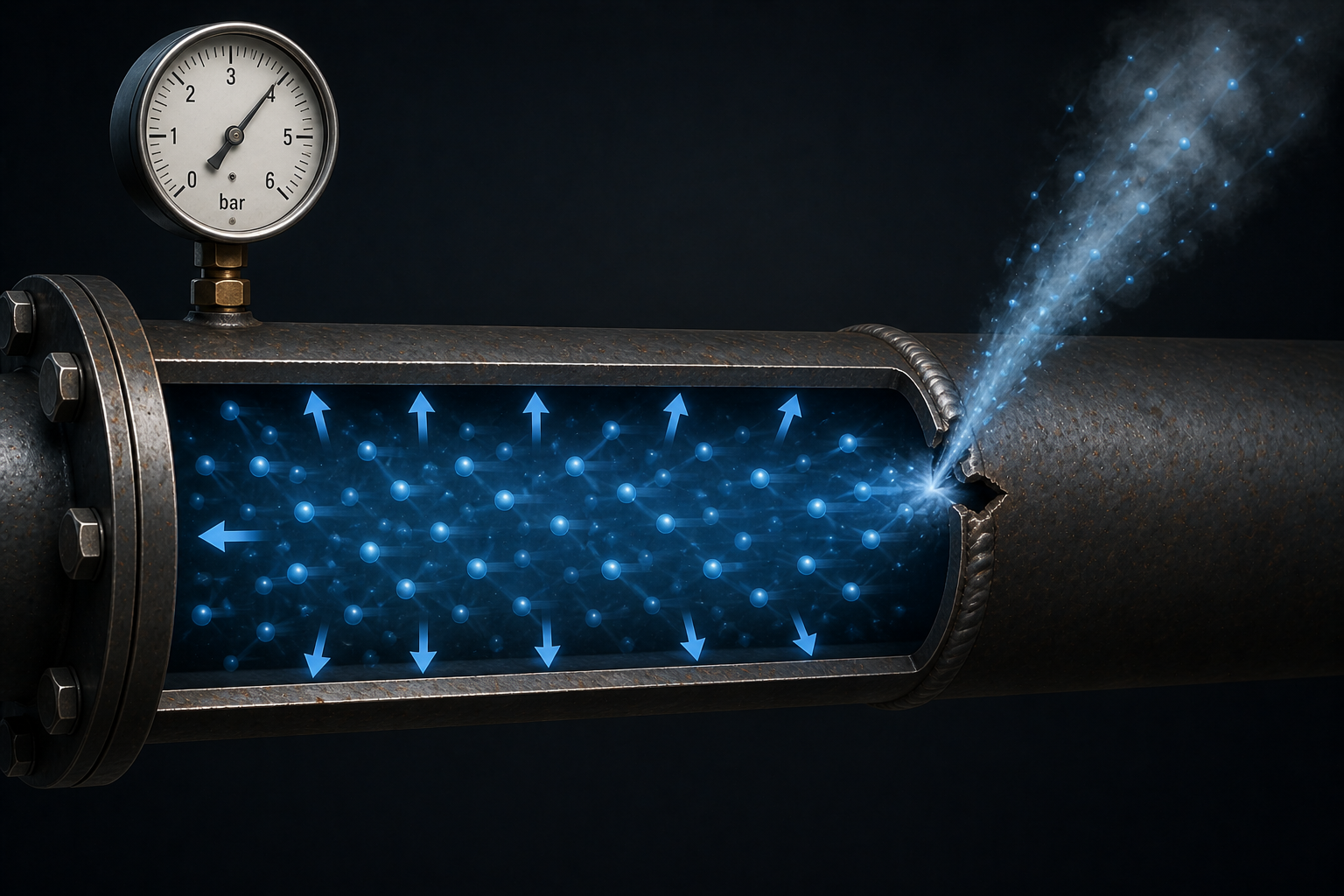
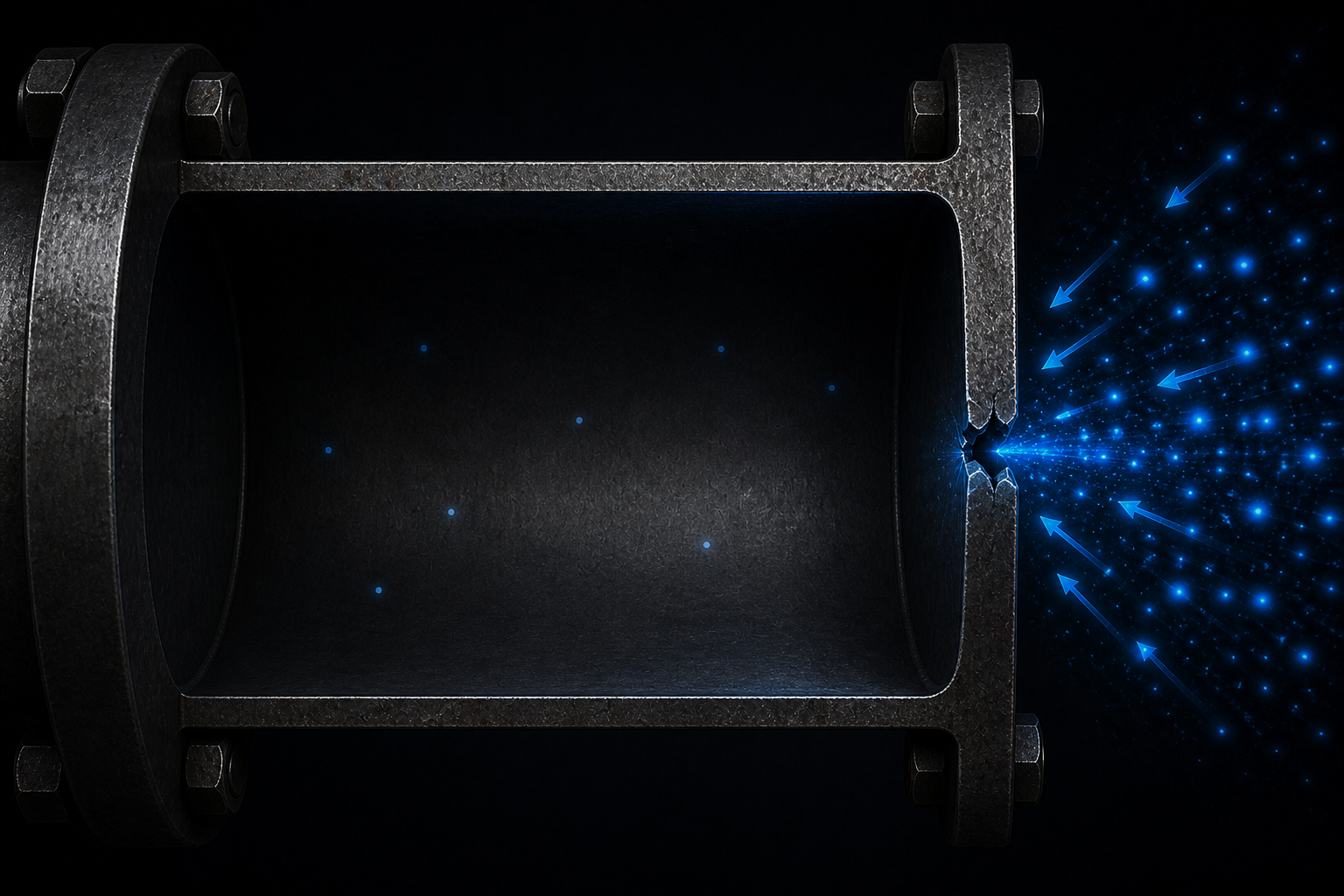
All leak testing methods rely on one basic idea: if there is an opening in a sealed system, something will move through it when there is a pressure difference. The method determines what that signal is and how it is measured.

Pressure

Gases and liquids are made up of molecules in constant motion, creating force against the walls of their container. When pressure inside a sealed system is higher than outside, any opening in the boundary will allow gas or liquid to escape. Most leak tests work by pressurizing the system and detecting that escaping gas or liquid.

Vacuum

A vacuum is created by removing gas or liquid from a container, typically using a pump. This reverses the pressure difference — the outside atmosphere pushes inward through any opening. Vacuum-based testing is used when higher sensitivity is needed or when the test object is a sealed unit that cannot be pressurized directly.

Leakage Rate

The amount of gas or liquid passing through a leak over time. Leak testing measures flow, not the size of the hole itself. Leakage rate depends on the size of the opening, the pressure difference across it, and the properties of the gas or liquid. The sensitivity of the method determines the smallest rate that can be reliably detected.

Open vs. Sealed Systems

How a leak test is set up depends on whether the system can be pressurized from the inside.

  • Open systems can be accessed and pressurized directly. The technician pumps in air or another gas and monitors the system for leaks. This is the most straightforward approach and is used for most pressure vessels, piping, and large assemblies.

  • Sealed systems cannot be opened or pressurized directly. These are tested by placing the sealed unit inside a chamber that is then evacuated or filled with tracer gas, and measuring whether the gas moves in or out of the sealed part. This approach is used for small electronic packages, medical devices, and hermetically sealed components.

Technician inspects a metallic setup with various cables and components in an industrial setting.

How Leak Testing Is Conducted in NDT

Leak testing uses a range of methods, from simple visual checks to highly sensitive instrument-based techniques. The choice depends on the required sensitivity, the size and type of the component, and the applicable standards.

Pressurized Testing

The system is filled with gas or liquid and pressurized above atmospheric pressure. Leakage flows outward through any opening. This is the most common approach for pipelines, vessels, and components that can be accessed and pressurized directly.

Vacuum Testing

Gas or liquid is removed from the system to create a pressure difference in the opposite direction. The atmosphere pushes inward through any opening. Used for sealed units, high-sensitivity applications, and systems designed to operate under vacuum.

Tracer Gas Testing

A specific gas is introduced into the system to serve as a detectable indicator. Because the tracer can be detected at extremely low concentrations, this approach achieves the highest sensitivity levels in leak testing.

Advanced LT Techniques

Bubble Leak Testing

  • The oldest and most straightforward leak testing technique. The system is pressurized and leak locations are identified by the visible formation of bubbles.

  • Immersion bubble testing submerges the component in water, where bubbles rise from any leak site. Solution bubble testing applies a soap solution to the outside surface, where bubbles form at the point of leakage.

  • Valued for its simplicity, low cost, and ability to pinpoint exactly where a leak is located, making it practical for both shop and field use.

Pressure Change Leak Testing

  • Monitors a sealed system over time for changes in pressure that indicate leakage.

  • Pressure decay testing pressurizes the system and monitors with calibrated gauges for any drop — the rate of decay indicates the approximate leak rate. Vacuum decay testing evacuates the system and monitors for any rise in pressure, which indicates air entering through an opening.

  • One of the most versatile techniques in leak testing, widely used on pipelines, pressure vessels, sealed packages, and HVAC systems.

Halogen Diode Leak Testing

  • Uses a halogen-based tracer gas, such as a refrigerant, introduced into the system being tested.

  • A handheld detector, often called a sniffer probe, is moved along the outside of the component and alerts the technician when it senses halogen in the surrounding air by ionizing the gas within the probe.

  • Commonly used for testing refrigeration systems, HVAC equipment, and automotive air conditioning systems.

Mass Spectrometer Leak Testing

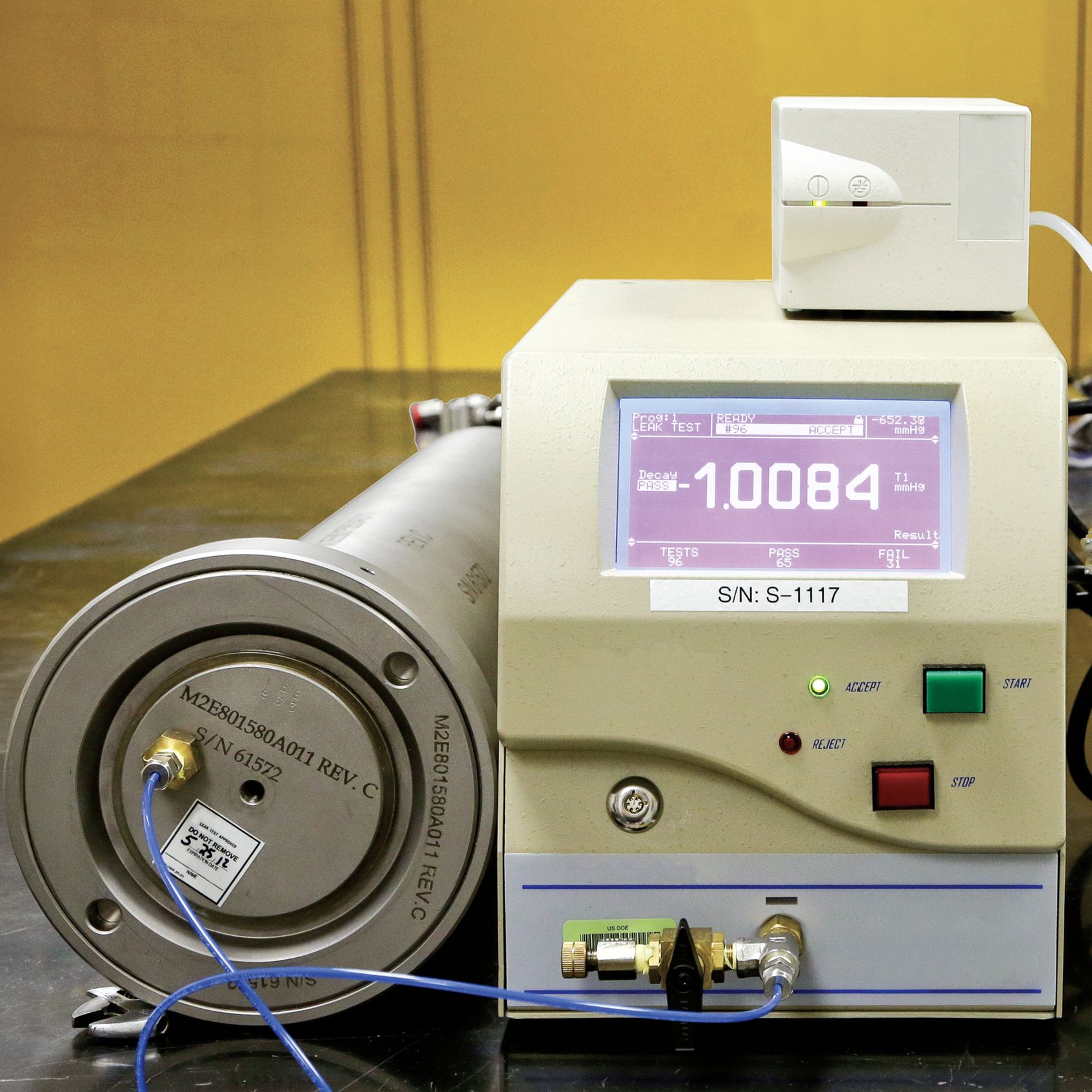
  • Combines a tracer gas — typically helium, because of its small atomic size, chemical inertness, and low natural concentration in the atmosphere — with a mass spectrometer for extremely precise detection.

  • The most sensitive technique commonly used in leak testing. It can measure exact leakage rates and detect flows so small they would be undetectable by other techniques.

  • This method is widely used in applications such as aerospace, electronics, and vacuum systems where very small leaks matter.”

A machine with a digital display reading "1.0084" connected to a cylindrical component with wires.

Add Leak Testing Certification to Your Qualifications

ASNT certifications enable you to become a qualified Level II or Level III in LT.

What Certification Is Right for Me?

Industry Applications of Leak Testing

Leak testing is used wherever the integrity of a sealed system matters. Because leaks can affect safety, performance, and regulatory compliance, LT is applied across a wide range of industries and applications.

Energy

In the energy sector, LT is used on pipelines, pressure vessels, storage tanks, and heat exchangers to verify integrity and detect leaks before they cause safety incidents, environmental releases, or regulatory violations.

Learn How NDT Is Used in Energy
"A composite image showcasing various energy sources: solar panels in the foreground, oil pump jacks in the middle ground, and wind turbines and a power plant in the background. The scene illustrates the diversity of energy production methods at sunset.

Aerospace

In aerospace, LT verifies the integrity of fuel tanks, hydraulic lines, pressurized cabins, and life support systems. High-sensitivity methods like helium leak testing are used to verify that critical systems meet extremely stringent leakage requirements.

Learn How NDT Is Used in Aerospace
A technician performing maintenance or inspection work on the landing gear of a large commercial airplane inside an aircraft hangar. The scene is illuminated with a blue tint, highlighting the aircraft's engines and the structural details of the hangar.

Transportation

LT ensures the safety and reliability of fuel systems, brake lines, air conditioning systems, and pressure components in vehicles, rail equipment, and marine vessels.

Learn How NDT Is Used in Transportation
A modern high-speed train moving swiftly through a train station at sunset. The motion blur effect emphasizes the train's speed, with vibrant colors in the sky and station lights creating a dynamic and futuristic atmosphere.

Manufacturing

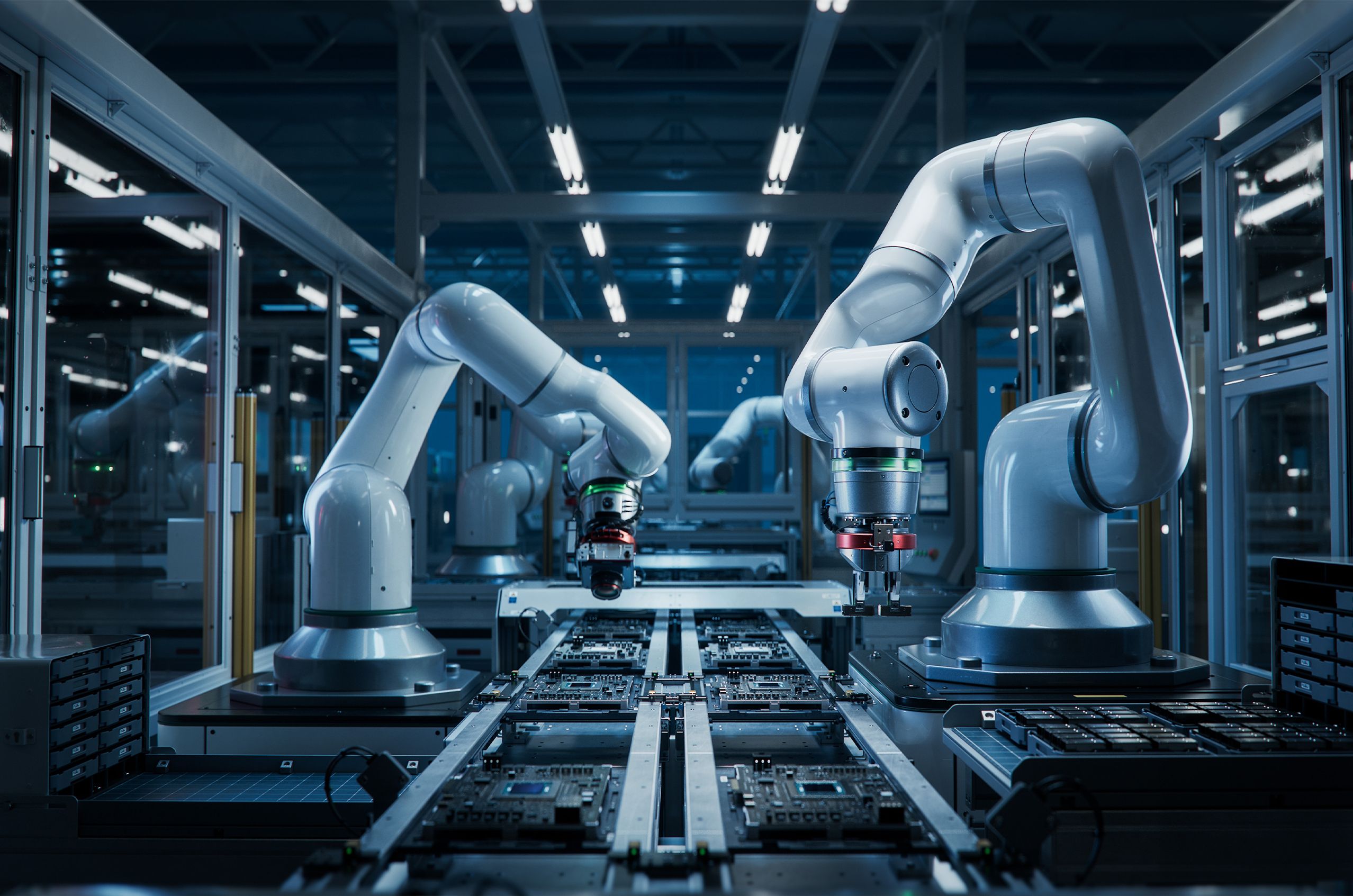
In manufacturing, LT is used to verify the integrity of components like valves, pipes, tanks, sealed electronics, and medical devices before they leave the production line. It is a standard step in quality control for any product that must hold pressure or prevent contamination.

Learn How NDT Is Used in Manufacturing
A modern manufacturing facility with robotic arms working on an automated assembly line. The scene is well-lit with blue overhead lighting, showcasing advanced machinery and precision engineering in a clean, industrial environment.

Infrastructure

LT supports infrastructure by verifying the integrity of water distribution networks, gas pipelines, and wastewater systems. It helps utilities identify leaks that waste resources, contaminate groundwater, or create safety hazards.

Learn How NDT Is Used in Infrastructure
A large infrastructure project featuring a highway under construction. Several cranes are positioned along the unfinished sections of the elevated roadway and bridge. The scene is set on a clear, sunny day with blue skies and some scattered clouds.

Example: LT in the Real World

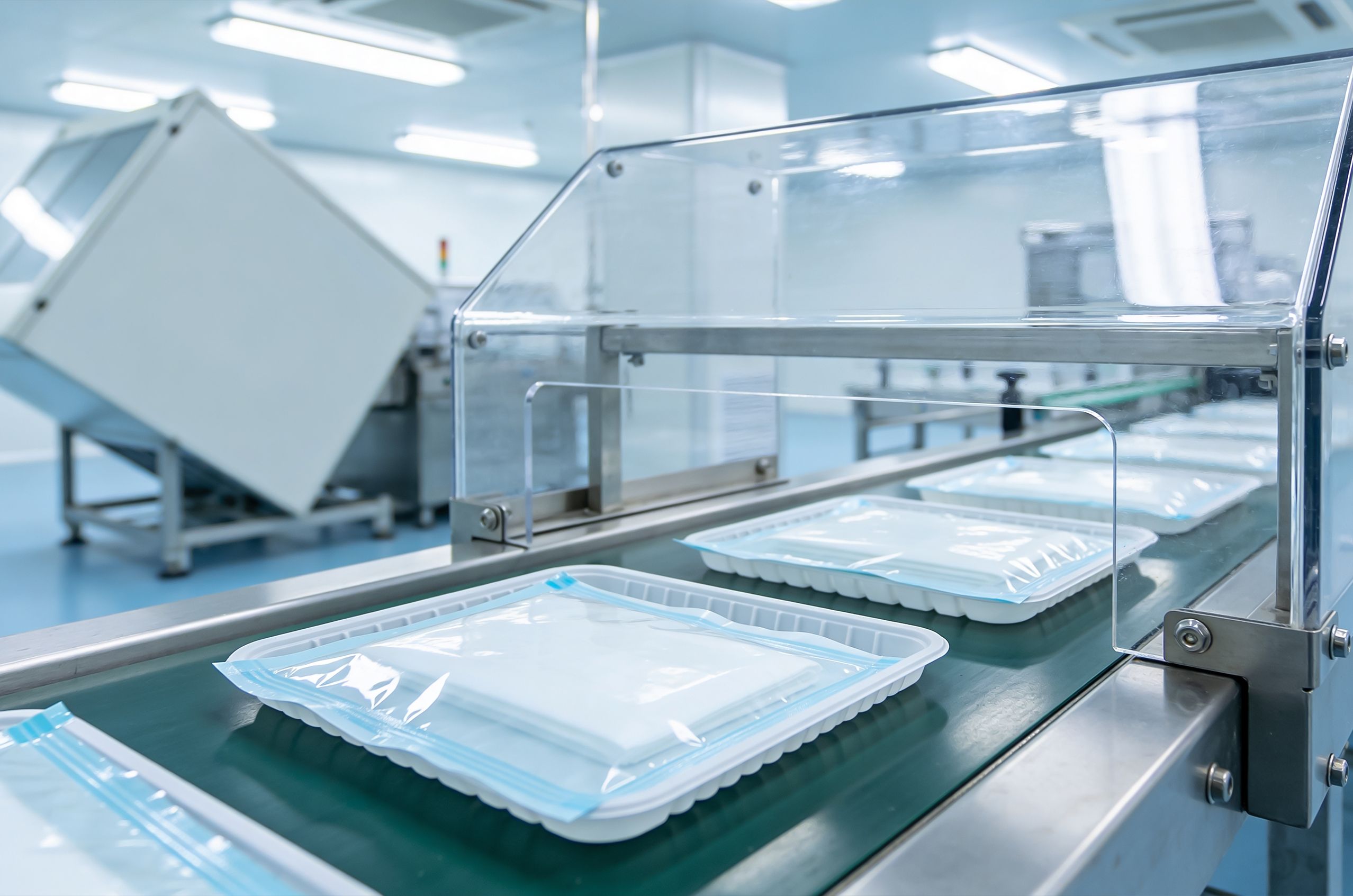
In pharmaceutical and medical device manufacturing, every sealed package must be verified to ensure that no contamination can enter and no product can escape. Even a very small leak in a sterile package can render the product unsafe.

Manufacturers use vacuum decay and helium leak testing to check the integrity of sealed packages as part of routine quality control. Each package is tested against a defined leak rate specification, and any that do not pass are identified and removed before they reach the end user.

At a larger scale, oil and gas operators use pressure decay testing to verify pipeline integrity after installation or repair. Sections of pipe are pressurized to test pressure and held for a defined period. Any drop in pressure triggers a closer investigation to find and repair the leak before the line is returned to service.

Sterile packages on a production line in a cleanroom environment, with machinery in the background.

Deeper Learning About Leak Testing

ASNT offers both members and nonmembers learning opportunities and resources for NDT specialists certified in LT.

Book

Nondestructive Testing Handbook, Vol. 2: Leak Testing (LT), 4th ed.

Expanded, updated reference for leak testing with refreshed technical guidance across major methods and applications. Covers safety and test setup considerations, key techniques, and updated standards references, supported by clear full-color photos.

Book

Quick Reference Method Cards: Leak Testing (LT)

Quick reference for Leak Testing (LT), featuring commonly used formulas and inspection data with practical examples and sample calculations. Designed as an at-a-glance aid for inspectors and a useful study companion for training.

Book

ASNT Level III Study Guide: Leak Testing (LT), 2nd ed.

This second edition Study Guide for Leak Testing (LT) Level III reflects the latest CP-105 outlines, with new and revised content, figures, and exam-style review questions. Best paired with ASNT's Nondestructive Testing Handbook, Vol. 2: Leak Testing.

Chat Window Trigger