Hand holding a thermal camera displaying a heat map of a room, highlighting temperature variations on the screen.

Infrared Testing: A Non-Contact Approach to NDT

Discover the advantages of the infrared testing (IR) method, understand the basic principles of IR, and explore the variety of techniques for applying this method in nondestructive testing across industries.

What Is Infrared Testing and How Is It Used in NDT?

Thermal/infrared testing (IR) is an NDT method that captures and analyzes heat patterns on the surface of an object using a thermal camera. Every material gives off heat energy as infrared radiation; IR reads these heat signatures to find areas where something is different from what is expected.

These temperature patterns can reveal issues that are not visible to the naked eye—things like overheating electrical connections, delaminations in composite materials, moisture trapped behind a wall, or gaps in insulation.

What makes IR especially useful is that many applications, IR works without touching the part being inspected. Technicians can scan large surfaces quickly from a distance, reducing inspection time and keeping personnel away from hazardous equipment.

A skilled NDT specialist uses their knowledge of heat behavior, material properties, and camera settings to plan inspections, capture meaningful thermal images, and interpret the results correctly.

The primary objectives of IR in industrial applications include:

  • Detecting Heat Anomalies: IR identifies unusual hot or cold spots on a surface, which can point to hidden defects, overheating components, or thermal barriers caused by delaminations, voids, or moisture.

  • Assessing Insulation and Energy Loss: By showing where heat is escaping, IR helps evaluate insulation effectiveness in buildings, industrial equipment, and process systems.

  • Electrical and Mechanical Inspection: IR is widely used to find overheating connections in electrical systems and detect friction, wear, or misalignment in mechanical equipment before failure occurs.

Advantages and Limitations of Infrared Testing in NDT

IR is used in a wide variety of inspection settings, especially where surface thermal behavior can provide useful diagnostic information. Before considering IR for an application, it helps to understand the main advantages and limitations of the method.

Advantages of Infrared Testing

  • Non-Contact Inspection: IR can assess materials and components from a distance, making it safe and practical for inspecting live electrical equipment, high-temperature systems, and hard-to-reach areas.

  • Fast, Wide-Area Coverage: A thermal camera can scan large surfaces quickly, reducing inspection time and allowing more ground to be covered in a single visit.

  • Real-Time Results: Thermal images are available immediately, allowing inspectors to make decisions on the spot without waiting for lab analysis.

  • Works During Operation: IR can inspect electrical and mechanical systems while they are running, so there is no need to shut down equipment for testing.

  • No Radiation or Couplant: IR relies on natural heat emission and does not require couplant or contact with the surface.

  • Versatility: IR is effective for a wide range of applications, from finding overheating electrical connections to detecting moisture in building envelopes and delaminations in composite structures.

Limitations of Infrared Testing

  • Surface-Based Detection: IR reads temperature at the surface. It can only detect internal problems if they create a temperature difference visible at the surface, which depends on the material and the defect location.

  • Affected by Surroundings: Wind, rain, sunlight, and ambient temperature can all influence thermal readings, making outdoor inspections more challenging.

  • Material Surface Properties Matter: Different materials give off infrared energy at different rates (emissivity). Without accounting for emissivity, temperature readings can be inaccurate.

  • Requires Skilled Interpretation: Reading thermal images accurately takes training. Inspectors need to understand heat flow, material properties, and how the inspection environment affects the results.

  • Equipment Cost: High-quality thermal cameras can be expensive, and maintaining accurate results requires proper calibration and care.

How Infrared Testing Works: Basic Principles

All objects give off heat energy in the form of infrared radiation. A thermal camera detects this energy and converts it into a visual image—called a thermogram—where areas of different temperature appear as different colors or shades. The warmer a surface, the more infrared energy it emits.

During an inspection, a technician scans the surface with a thermal camera. Areas that are hotter or cooler than expected appear as anomalies in the thermogram, indicating potential problems beneath the surface or within the component.

NDT practitioners use their understanding of heat flow, material properties, and camera settings to plan inspections, capture accurate thermal images, and correctly interpret what those images reveal.


How Heat Moves Through Materials

Heat always moves from warmer areas to cooler ones, and it does so in three ways. Understanding these mechanisms is essential to interpreting what a thermal camera sees.

Conduction

Like heat traveling from the handle of a metal spoon sitting in hot soup, heat flows through solid materials from warmer areas to cooler ones. In IR inspection, voids, delaminations, or other anomalies interrupt this flow, creating temperature differences the camera can see at the surface.

Convection

Like warm air rising from a heater and cool air settling near the floor, heat moves through air and fluids by natural circulation. IR uses this principle to find areas where insulation is missing, gaps allow air movement, or heated and cooled air is escaping from a building or system.

Radiation

The heat energy that every surface emits as infrared waves (this is what the thermal camera actually detects). A hot engine radiates more energy than a cool wall, the same way you can feel heat coming off a campfire without touching it. How much a surface radiates depends on its temperature and its surface properties.

Material Properties That Affect IR Results

The accuracy of an IR inspection also depends on how the material's surface interacts with infrared energy. Three properties are especially important.

Emissivity

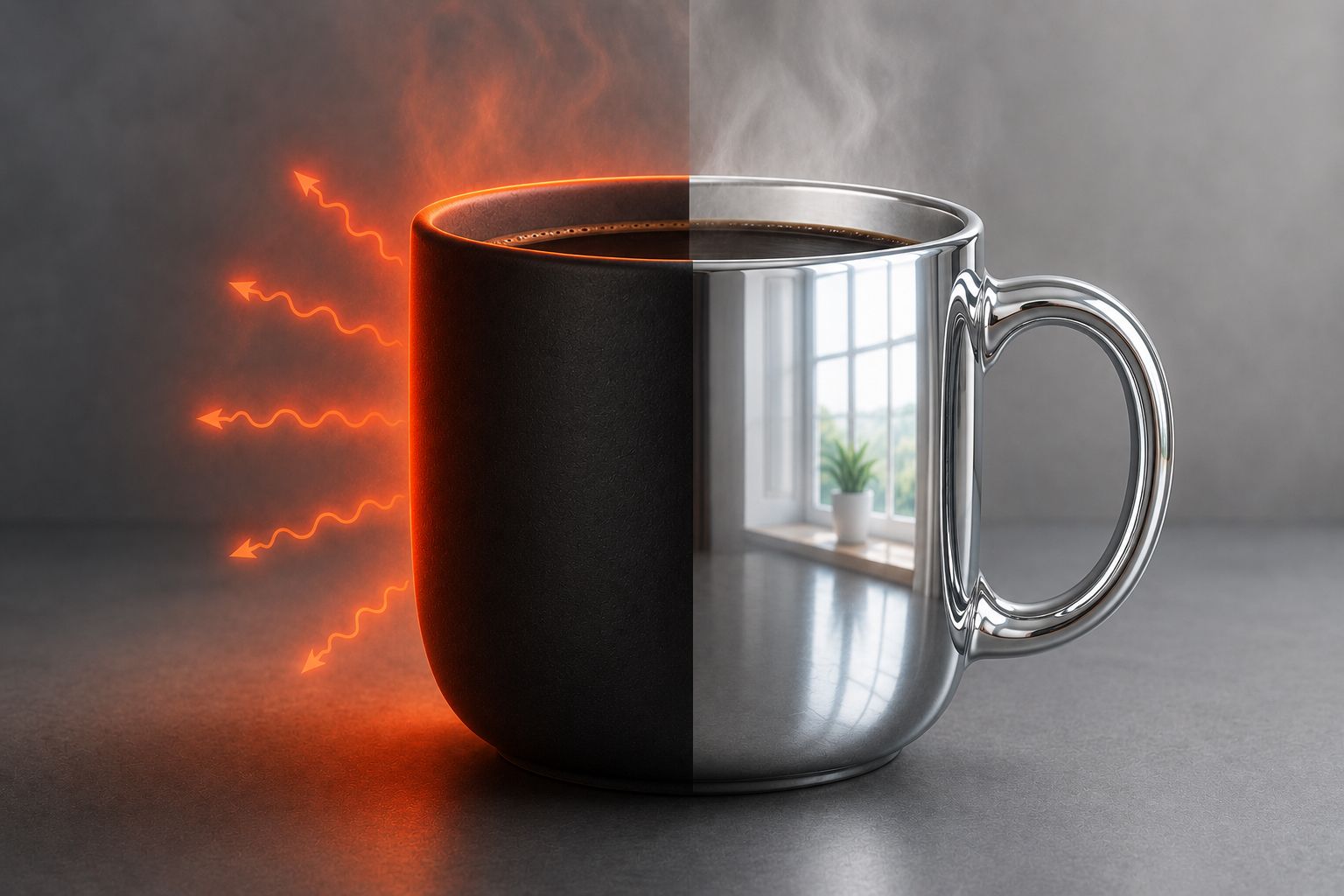
How efficiently a surface gives off infrared energy. A matte ceramic mug radiates heat clearly and consistently; a thermal camera can easily read its temperature. A polished metal mug holding the same hot liquid gives off very little of its own heat and instead acts like a mirror, reflecting infrared energy from nearby objects and producing misleading readings.

Half metallic, half ceramic mug with steam. Red heat lines from ceramic side, window reflection on metallic side.

Reflectivity

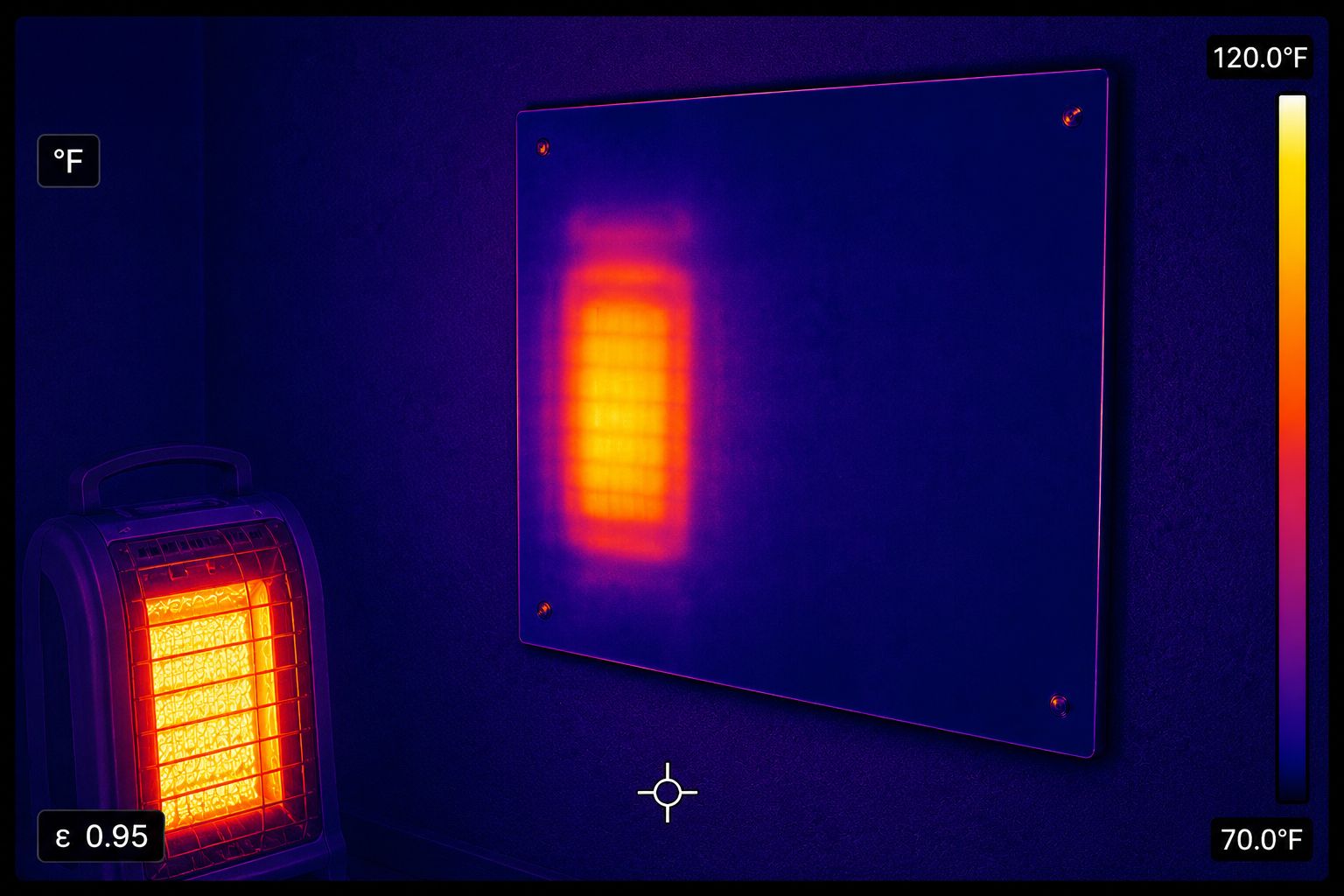
Like looking at a chrome bumper on a sunny day and seeing the sky instead of the metal, highly reflective surfaces bounce infrared energy from their surroundings back at the camera. This can make the camera read the temperature of a nearby object rather than the surface itself. Accounting for reflectivity is one of the key skills in IR interpretation.

Thermal image showing a portable heater and its heat reflection on a wall, with a temperature scale indicating up to 120°F.

Thermal Conductivity

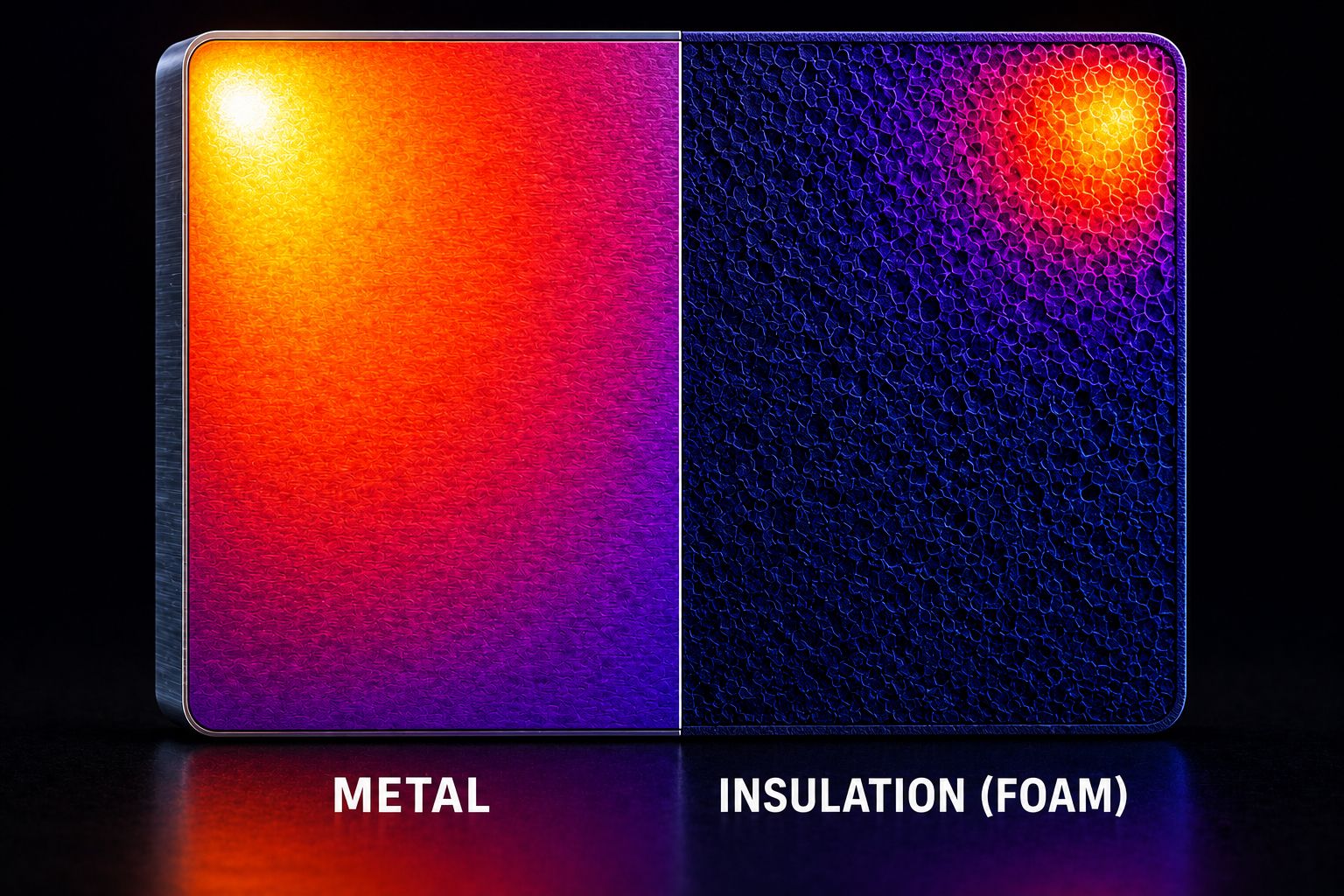
How quickly heat spreads through a material. Metals are like a hot pan; touch one spot and the heat spreads everywhere fast, which can make small defects harder to see because the temperature evens out quickly. Insulation is the opposite; heat stays put, making even small temperature differences easy to spot.

Close-up of a thermal image showing heat distribution: hot on metal side; cool on insulation (foam) side. Labels "METAL" and "INSULATION (FOAM)" below.
Firefighters in orange gear and red helmets use a thermal imaging camera during a drill, set against a clear blue sky.

How Infrared Testing Is Conducted in NDT

IR uses different camera setups, heat sources, and analysis methods depending on what is being inspected and what type of defect or anomaly is being sought.

Passive Inspection

The technician reads the natural heat patterns already present in the object or system. No external heat source is applied. This is the most common form of IR inspection, used for electrical and mechanical scanning, building envelope assessment, and process monitoring.

Active Inspection

An external heat source is applied to the material, and the camera records how the heat moves through it over time. Areas with hidden defects heat up or cool down at a different rate than the surrounding material. This is used when natural temperature differences are not large enough to reveal problems on their own.

Scanning and Imaging Approaches

The camera captures continuous thermal images as an object moves past on a conveyor or production line. This provides high-resolution thermal data at production speed and is used for real-time quality monitoring in manufacturing.

Infrared Testing Techniques Used in NDT

Pulsed Thermography: A brief burst of heat is applied to the surface and the cooling response is recorded to reveal subsurface defects.

Lock-In Thermography: Heat is applied in repeating cycles, filtering out surface noise to detect deeper defects with greater clarity.

Step Heating: Heat is applied continuously over a longer period, allowing detection of defects at greater depths than pulsed methods.

Vibrothermography: Mechanical vibration generates heat at defect sites through friction, making cracks and disbonds visible in the thermal image.

Thermoelastic Stress Analysis: Measures tiny temperature changes under cyclic loading to map stress distribution and identify areas prone to fatigue.

Thermocoupling: Contact-based sensors measure temperature at specific points, often used alongside thermal imaging for calibration and verification.

Inductive Thermography: Electromagnetic induction generates heat in conductive materials, effective for finding surface cracks and fatigue damage in metals.

Line Scanning: Captures continuous thermal data as an object moves past the camera, used for real-time quality control on production lines.

Convective Heat Transfer: Analyzes how heated or cooled air moves across a structure to detect air leaks, insulation gaps, and HVAC issues.

Add Infrared Testing Certification to Your Qualifications

ASNT certifications enable you to become a qualified Level III in IR.

What Certification Is Right for Me?

Industry Applications of Infrared Testing

Infrared testing is used across industries to find hidden problems by reading heat patterns. Because it is non-contact and works in real time, IR fits naturally into maintenance, quality control, and structural assessment programs.

Energy

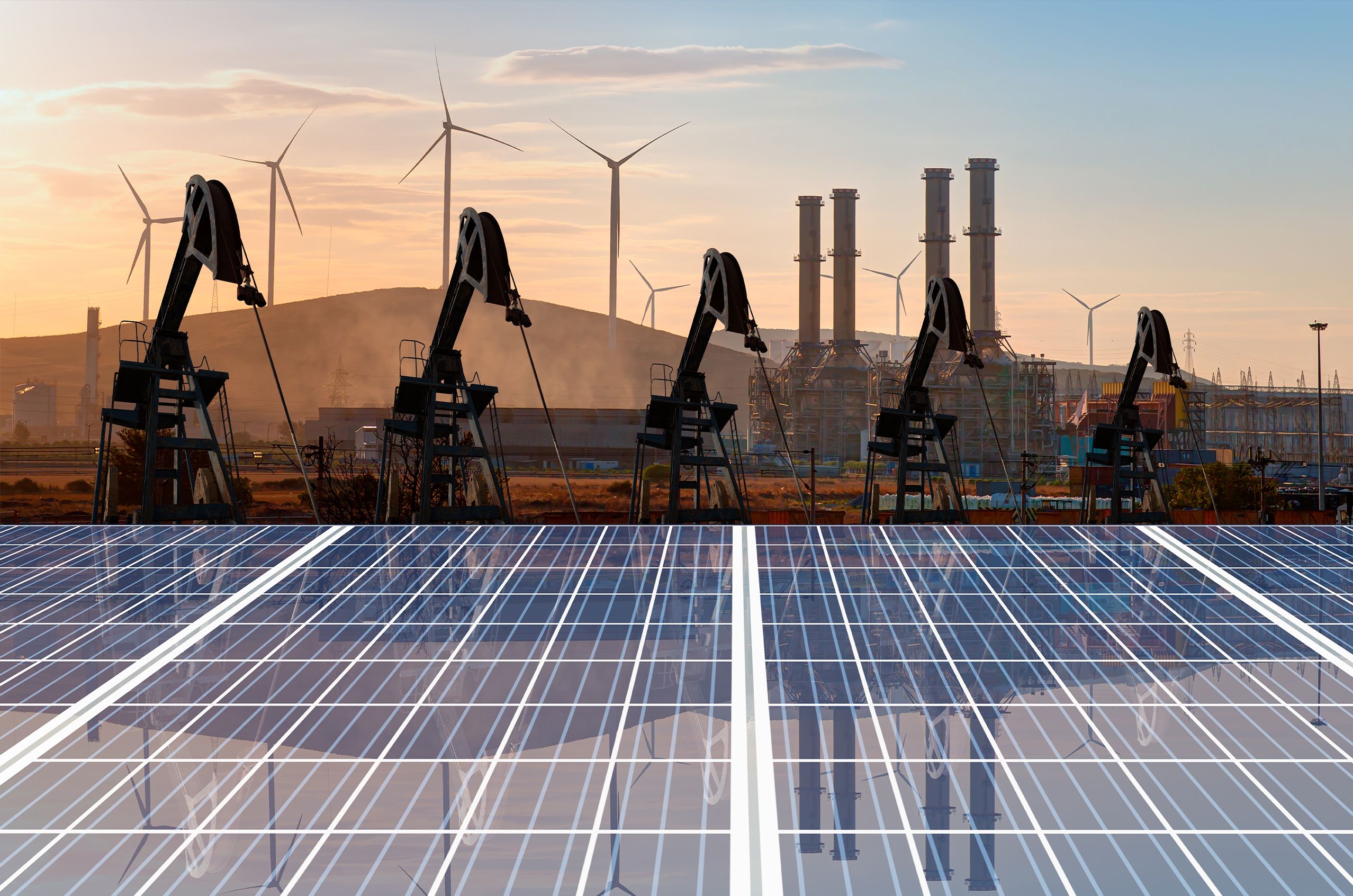
In the energy industry, IR is used to monitor electrical transmission lines, transformers, substations, and power generation equipment for overheating components and failing connections. It is also used to inspect insulation on steam systems, detect heat loss in process piping, and monitor combustion in boilers and furnaces.

Learn How NDT Is Used in Energy
"A composite image showcasing various energy sources: solar panels in the foreground, oil pump jacks in the middle ground, and wind turbines and a power plant in the background. The scene illustrates the diversity of energy production methods at sunset.

Aerospace

In aerospace, IR is used to inspect composite structures for hidden delamination, disbonds, and moisture ingression. Active IR techniques such as pulsed thermography are applied to aircraft skins, control surfaces, and bonded assemblies to verify integrity without disassembly.

Learn How NDT Is Used in Aerospace
A technician performing maintenance or inspection work on the landing gear of a large commercial airplane inside an aircraft hangar. The scene is illuminated with a blue tint, highlighting the aircraft's engines and the structural details of the hangar.

Transportation

IR supports predictive maintenance in transportation by identifying overheating components in rail systems, locomotives, and commercial vehicles. It is used to inspect vehicle braking systems, detect bearing failures, and monitor engine and drivetrain components during operation.

Learn How NDT Is Used in Transportation
A modern high-speed train moving swiftly through a train station at sunset. The motion blur effect emphasizes the train's speed, with vibrant colors in the sky and station lights creating a dynamic and futuristic atmosphere.

Manufacturing

In manufacturing, IR monitors production processes in real time, checking for proper curing in composites and adhesives, verifying heat treatment results, and detecting defects in bonded assemblies. It is also used for quality control of electrical components and circuit boards.

Learn How NDT Is Used in Manufacturing
A modern manufacturing facility with robotic arms working on an automated assembly line. The scene is well-lit with blue overhead lighting, showcasing advanced machinery and precision engineering in a clean, industrial environment.

Infrastructure

IR is a standard tool in building inspection, used to find heat loss, moisture intrusion, missing insulation, and air infiltration. It is also applied to infrastructure such as bridges and tunnels to detect subsurface voids, delaminations, or moisture in concrete structures.

Learn How NDT Is Used in Infrastructure
A large infrastructure project featuring a highway under construction. Several cranes are positioned along the unfinished sections of the elevated roadway and bridge. The scene is set on a clear, sunny day with blue skies and some scattered clouds.

Example: IR in the Real World

In electrical substations, IR is used routinely to detect overheating connections and failing components before they cause outages or fires. During an inspection, a technician scans the switchgear, bus bars, and transformer connections with a thermal camera while the equipment is energized.

Because these problems generate excess heat before they cause a visible failure, IR gives maintenance teams a window of time to schedule repairs during planned outages rather than responding to emergency failures.

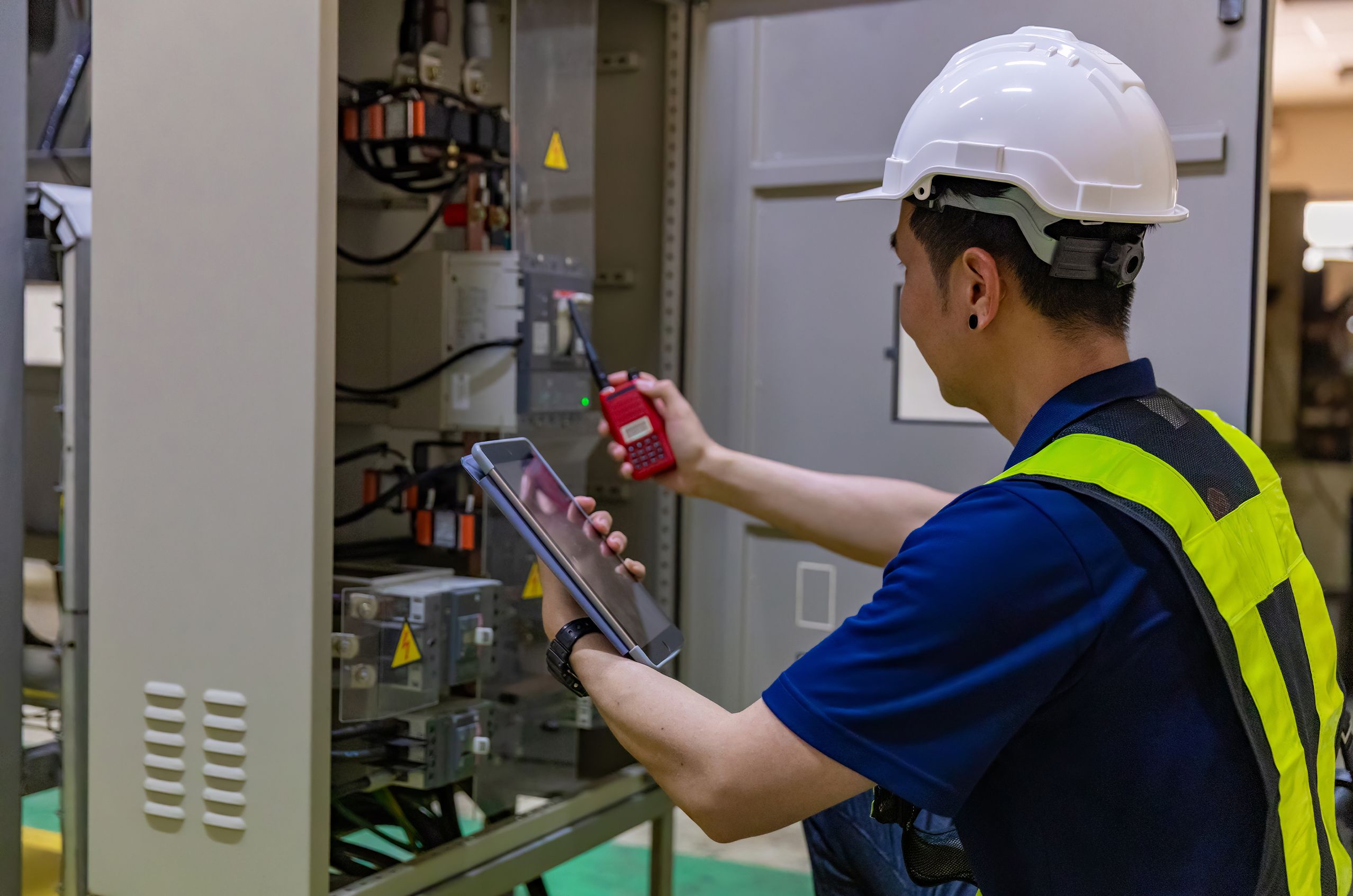
Electrician in a hard hat and safety vest checks a control panel, using a tablet and radio for communications.

Deeper Learning About Infrared Testing

ASNT offers both members and nonmembers learning opportunities and resources for NDT specialists certified in IR.

Book

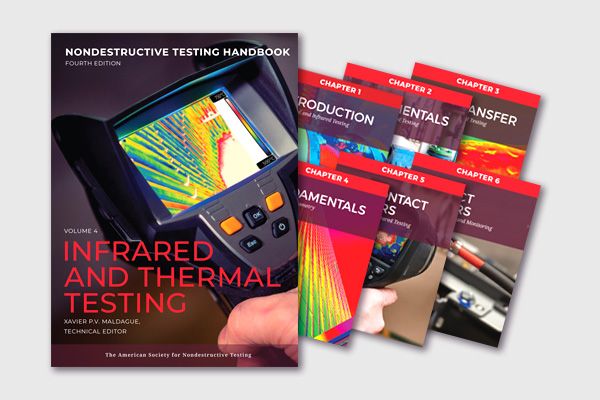
Nondestructive Testing Handbook: Vol. 4, Thermal and Infrared Testing (IR), 4th ed.

Comprehensive reference for thermal and infrared testing, with expanded guidance, updated applications, and practical setup and technique coverage. Includes rich visual examples and resources that support interpretation, data processing, and real-world inspection work across industries.

Book

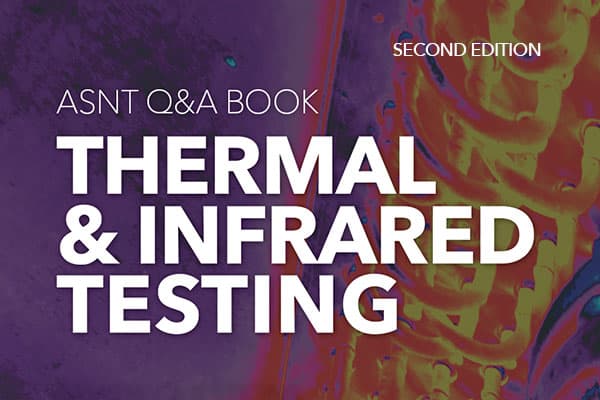
ASNT Questions & Answers Book: Thermal & Infrared Testing (IR), 2nd Ed.

This updated Thermal and Infrared (IR) Q&A Book is a valuable resource for exam preparation and review. It contains more than 120 Level I, II, and III multiple-choice questions, each with four answer choices to match the ASNT exam format. Many questions are new or revised, and all references have been updated.

Book

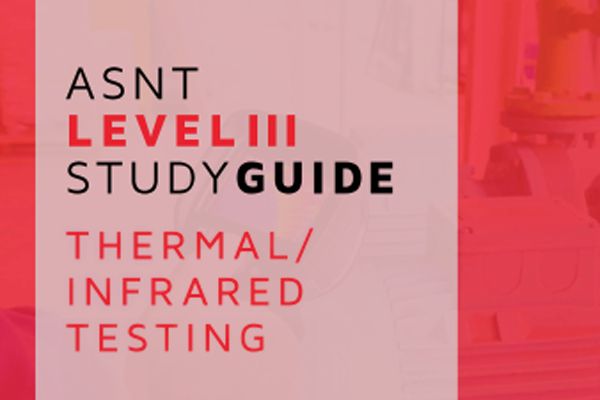
ASNT Level III Study Guide: Thermal/Infrared Testing (IR), 2nd ed.

Level III thermal/infrared testing study guide aligned with CP-105, updated with new chapters, color photos, and expanded coverage of interpretation, standards, safety, and investigation techniques. Includes chapter review questions to support focused exam preparation.

Chat Window Trigger